

Jackknife and rollover accidents can both involve a truck losing stability, but they happen in different ways. A jackknife occurs when the tractor and trailer fold toward each other. A rollover occurs when part or all of the truck tips onto its side or roof.
Speed, braking, traction, cargo weight and distribution, road conditions, and mechanical problems can all contribute to these crashes. Identifying the cause can become important after a truck accident because it may reveal whether the driver, trucking company, cargo loader, or another party contributed to the collision.
What Causes a Truck to Jackknife?
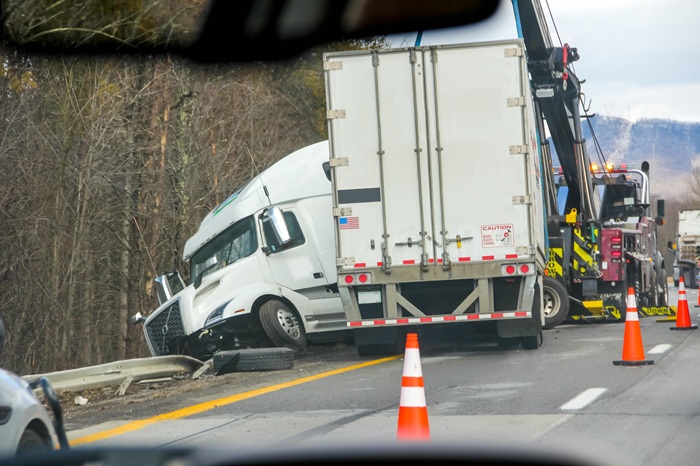
A jackknife occurs when the tractor and trailer no longer remain aligned and begin folding toward each other at the connection point. Loss of traction during braking is one way this can happen.
For example, FMCSA training materials explain that when a tractor’s rear drive wheels lock during braking, they lose traction and can slide sideways. With a trailer attached, the trailer can push the tractor sideways and cause a jackknife.
Several factors can contribute to that loss of control, including:
- Hard or sudden braking
- Wet, icy, or otherwise slippery pavement
- Excessive speed for road or traffic conditions
- Brake problems or improper brake adjustment
- Abrupt steering or evasive maneuvers
A jackknife is therefore not necessarily evidence of a single driver error. Determining why the tractor and trailer lost alignment may require examining the driver’s actions, road conditions, braking system, and other vehicle evidence.
| Feature | Jackknife Accident | Rollover Accident |
| What happens | The tractor and trailer fold toward each other at the connection point | The truck or trailer tips onto its side or roof |
| Common contributing factors | Loss of traction, hard braking, brake problems, slippery roads, or abrupt maneuvers | Excessive speed for a curve, abrupt steering, cargo shift, or a high center of gravity |
| How cargo can affect risk | Weight and weight distribution can affect traction and braking | Cargo weight, placement, and shifting can affect the truck’s center of gravity and stability |
| Road conditions | Wet or icy pavement can reduce traction and increase skid risk | Curves, ramps, shoulders, and uneven surfaces can contribute to instability |
| Evidence that may help explain the crash | Brake and inspection records, vehicle data, roadway evidence, and driver records | Cargo records, securement evidence, vehicle data, roadway evidence, and driver records |
How Cargo Weight Can Affect Truck Stability
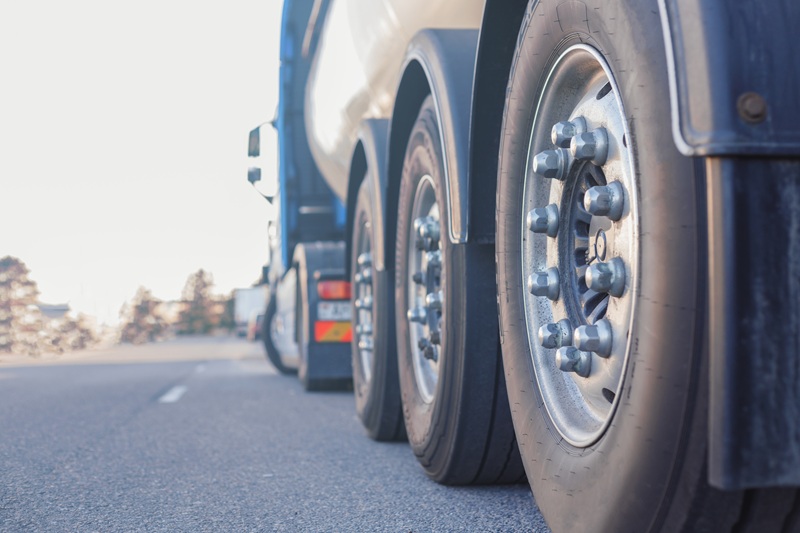
Cargo weight and distribution can affect how a tractor-trailer responds to braking and steering. An empty trailer, often described as deadheading, handles differently from a loaded trailer because less weight is distributed across the vehicle and its axles.
FMCSA driver guidance notes that lightly loaded trucks can have less traction and may require greater stopping distance because the wheels can lock more easily during hard braking. This can contribute to a skid and increase the risk of losing control.
More weight does not automatically make a truck safer, however. A heavy or poorly distributed load creates different stability concerns, particularly during curves and sudden steering maneuvers. Investigating a jackknife accident may therefore include examining how the trailer was loaded, how its weight was distributed, and whether braking or traction contributed to the loss of control.
What Causes Truck Rollovers?
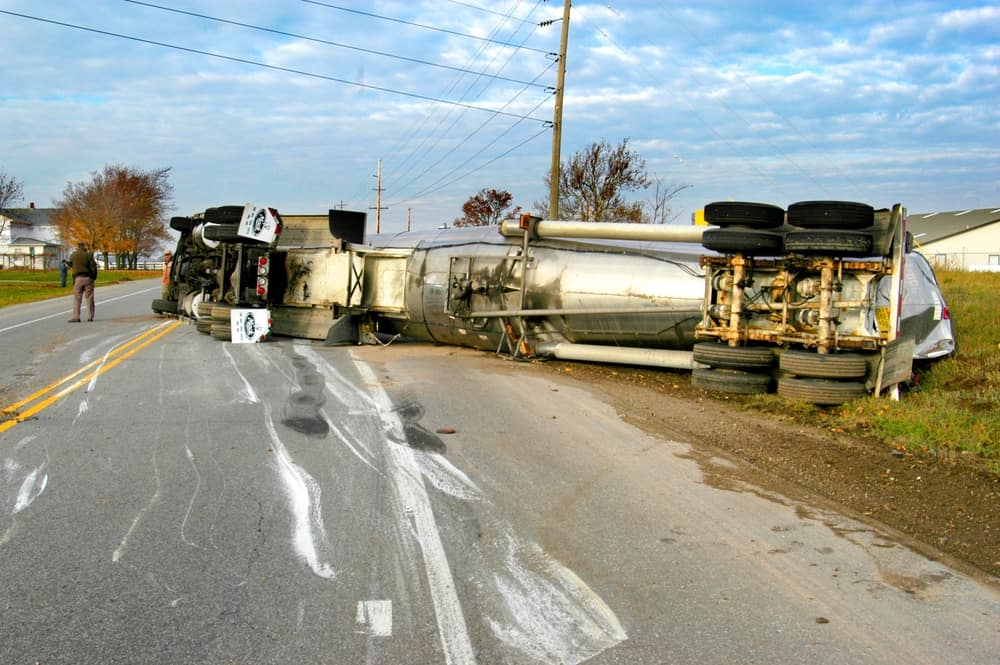
Truck rollovers often involve a combination of speed, steering, road conditions, and vehicle stability. Research sponsored by FMCSA found that failing to adjust speed for curves was a significant factor among the rollover crashes studied. Highway entrance and exit ramps were among the locations where excessive speed for a curve contributed to rollovers.
Other rollover scenarios can involve a truck drifting from its lane followed by an abrupt steering correction. Driver distraction, fatigue, or another event may contribute to that sequence.
Cargo also affects rollover risk. Tractor-trailers have a higher center of gravity than passenger vehicles, and the height and distribution of a load can affect stability. A sharp turn or sudden steering maneuver can shift weight toward one side of the trailer and increase the risk of a rollover.
Why Cargo Shift Can Increase Rollover Risk
Cargo that shifts during a turn, hard braking, or sudden maneuver can change a truck’s balance and center of gravity. This can make an already unstable trailer more difficult to control and may contribute to a rollover.
Federal cargo securement rules require cargo on commercial vehicles to be secured against shifting or tipping in ways that could adversely affect the vehicle’s stability or maneuverability. These requirements apply to cargo carried in enclosed trailers as well as other covered commercial vehicles.
A rollover investigation may therefore look beyond the driver’s actions immediately before the crash. Cargo placement, tiedowns or other securement equipment, loading records, and required cargo inspections may help determine whether an improperly secured load contributed to the loss of stability.
Road and Weather Conditions That Contribute
Road and weather conditions can increase the risk of both jackknife and rollover accidents. Factors that may contribute include:
- Wet or icy pavement, which can reduce traction during braking or steering
- Downhill grades, which can increase braking demands and allow large trucks to gain speed
- Highway ramps and curves, where a truck may need to travel below the speed appropriate for passenger vehicles
- Sudden lane changes or evasive maneuvers, which can destabilize a truck, particularly when its center of gravity is high
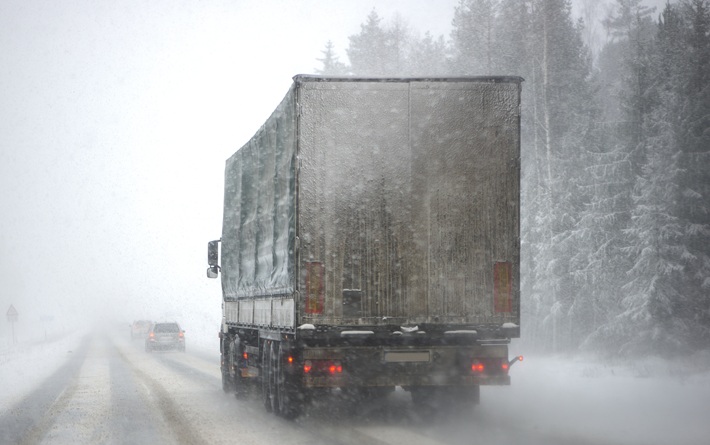
FMCSA specifically advises commercial drivers to reduce speed for wet roads, curves, ramps, and other conditions that affect vehicle stability. The agency also notes that large trucks can roll over on curves even when traveling at the posted speed because of their higher center of gravity.
These conditions do not necessarily establish what caused a particular crash. Driver decisions, vehicle condition, cargo loading, speed, and roadway conditions may interact in different ways. Determining the cause requires examining the circumstances surrounding the specific jackknife or rollover.
Who Can Be Responsible When a Truck Jackknifes or Rolls Over?
Responsibility for a jackknife or rollover depends on what caused the truck to lose stability or control. In some crashes, more than one person or company may have contributed. Potentially responsible parties can include:

- The truck driver, if speeding, distraction, fatigue, improper braking, or another driving error contributed to the crash
- The motor carrier, if inadequate vehicle maintenance, unsafe company practices, or another failure contributed to the collision
- A cargo loading or shipping company, if improper loading or securement contributed to cargo shifting or instability
- A repair provider, if negligent maintenance or repairs contributed to a mechanical failure
- A vehicle or parts manufacturer, if a defective component contributed to the loss of control
Determining responsibility may require reviewing maintenance and inspection records, cargo and securement documentation, electronic logging data, driver qualification information, and other records related to the truck and trip.
These records can help distinguish between driver error, a maintenance problem, improper cargo securement, or another cause of the crash.
Determining What Caused a Jackknife or Rollover
A jackknife or rollover does not necessarily point to one specific cause. Driver actions, braking and other mechanical systems, cargo weight and securement, road conditions, and vehicle speed can all become relevant when determining why the truck lost control.
The evidence needed depends on the circumstances. Maintenance and inspection records may reveal a brake or mechanical problem. Cargo documentation can help establish how the trailer was loaded and whether the freight was properly secured. Electronic logging and other driver records may become relevant when fatigue or hours of service are at issue.
Identifying the cause can also help determine who may bear responsibility for the resulting injuries and losses. Someone injured in a semi-truck accident in South Carolina can have Morris Law, LLC, review the available evidence and circumstances surrounding the crash.