

Under South Carolina’s current distracted driving law, drivers generally cannot hold or support a phone or other mobile electronic device while operating a vehicle. The law also restricts activities such as texting, reading digital content, watching videos, and manually using apps while driving, although hands-free functions and certain other uses remain allowed.
But a phone is not the only way a driver can become distracted. Eating, adjusting controls, reaching for something in the vehicle, or simply looking away from the road can contribute to an accident even when the behavior does not violate South Carolina’s hands-free law. That difference matters after a crash because a driver can potentially be negligent without receiving a distracted driving citation.

How South Carolina’s Distracted Driving Law Changed
South Carolina significantly changed its distracted driving law in 2025. Governor Henry McMaster signed the South Carolina Hands-Free and Distracted Driving Act in May, replacing the state’s narrower ban on texting while driving. The new law took effect September 1, 2025, followed by a 180-day warning period that ended February 28, 2026. Full enforcement, including fines and applicable license points, began after that period.
The previous law focused primarily on composing, sending, or reading text messages behind the wheel. The current version of S.C. Code Section 56-5-3890 goes further by restricting drivers from holding or supporting mobile electronic devices and prohibiting several other forms of device use. As a result, a driver no longer has to be actively texting for their phone use to violate South Carolina law.
South Carolina’s Hands-Free Law: What It Actually Prohibits
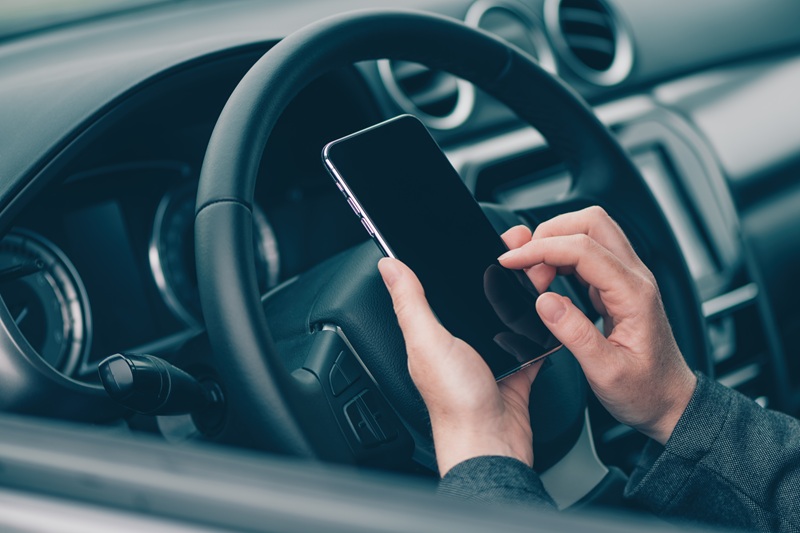
The statute focuses on physical contact with a device, not just texting. Drivers generally may not hold or support a mobile electronic device with any part of the body while operating a vehicle, even briefly. This covers a phone wedged against a shoulder, balanced on a leg, or held in a hand for a quick glance.
Beyond holding a device, the law prohibits reading, composing, or transmitting text messages, emails, or app and website content, along with watching videos, movies, games, or video calls while driving. Several common practices remain legal under specific conditions.
- Voice-activated or Bluetooth calling, without holding the device
- Navigation or music controlled through a mounted device, without manually typing into it
- Earpieces and smartwatches used for voice-based communication
- Phone use while lawfully parked or stopped off the roadway
A first offense generally results in a $100 statutory fine, though additional court fees and assessments typically bring the total closer to $232.50 once processed. A second offense within three years generally carries a $200 fine and two points against the driver’s license.
What Is Considered Distracted Driving Beyond the Phone Law
South Carolina’s hands-free statute focuses specifically on mobile electronic devices. It does not make every behavior that takes a driver’s attention away from the road a violation of the hands-free law. Other common distractions can include:
- Eating or drinking while driving
- Applying makeup or grooming
- Reaching for something inside the vehicle
- Adjusting the radio or other vehicle controls
- Turning around to interact with children or passengers
- Looking at something outside the vehicle instead of the road
These behaviors can still matter after an accident. For example, a car accident in Aiken caused by a driver reaching for something inside the vehicle could raise questions about negligence even though the behavior itself does not violate the hands-free statute.

GPS use falls somewhere in between. Using navigation through a mounted device can be permitted, while manually entering information into the device while driving may violate the hands-free law. Either way, taking attention away from the road can become relevant when determining what caused a crash.
Cell Phone Use While Driving: Where the Legal Line Sits
One of the biggest changes under South Carolina’s current law is that a driver does not have to be texting to violate it. Holding or supporting a phone with any part of the body can be enough, even if the driver is only glancing at a map or checking a notification. Mounting the device allows certain hands-free uses, but it does not make every type of interaction with the phone legal.
This is broader than South Carolina’s previous texting law, which focused primarily on messages being read, written, or sent. After a crash, evidence that a driver was using a phone may therefore be relevant even when no one can establish that the driver was actively texting at the moment of impact.
Keep In Mind
A driver does not have to receive a distracted driving citation to be negligent. Evidence that they were not paying attention can still matter in a car accident claim.
How Distraction Gets Proven in a South Carolina Car Accident Claim
Distraction is rarely obvious from the crash scene alone, so establishing it in a civil claim may require several different sources of evidence.
- Cell phone carrier records, which may show calls or text activity around the time of the crash
- Data from the phone itself, when available and legally obtained, which may provide more detail about device use
- Event data recorder information from the vehicle, sometimes called the “black box,” which can show speed, braking, and other vehicle activity before impact
- Witness statements describing a driver looking down, drifting, or failing to react to traffic
- The investigating officer’s report or citation, particularly if phone use was observed at the scene
No single piece of evidence necessarily proves that distraction caused a crash. Carrier records, for example, may show that a call or text occurred but not every type of activity performed on the device. When considered alongside witness accounts, vehicle data, crash timing, and other evidence, however, those records can help build a clearer picture of whether distraction may have contributed to the crash.
Distracted Driving Accidents Across South Carolina
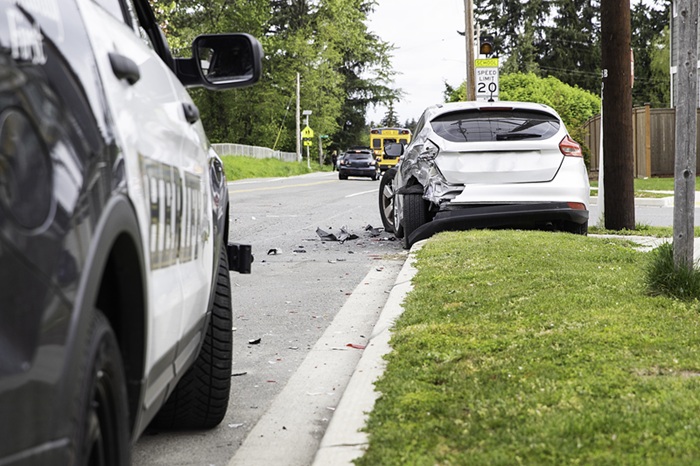
Distracted or inattentive driving is a factor in more than 20,000 crashes in South Carolina every year, according to the South Carolina Department of Public Safety. These crashes are not limited to one type of road or traffic environment. A moment of distraction can contribute to a rear-end collision in heavy traffic, a lane-departure crash at highway speeds, or a driver failing to notice a pedestrian, cyclist, or stopped vehicle.
The circumstances can also look different depending on where the crash happens. A Myrtle Beach car accident may occur in dense traffic where drivers are navigating unfamiliar roads, while a Columbia car accident may happen during a daily interstate commute. In either setting, the important question is not simply whether a phone was present in the vehicle, but whether distraction contributed to the driver’s actions and ultimately to the crash.
A Texting Citation Is Not Required for an Injury Claim
A driver does not have to receive a texting or hands-free citation for distraction to matter after a crash. The responding officer may not see the driver using a phone, and evidence of device use may not surface until later. A lack of a citation therefore does not necessarily mean distraction has been ruled out.
This can become especially important when the circumstances of a crash suggest the other driver was not paying attention. In busy coastal tourist areas like Murrells Inlet, a car accident may involve slowing traffic, unfamiliar drivers looking for turns, or frequent stops near restaurants, shops, and beach access points. If a driver reacts late, drifts from a lane, or fails to brake, distraction may be one of several factors worth examining even when no citation was issued.
The same is true in reverse. Evidence that a driver sent a text or used a phone near the time of an accident does not automatically prove that distraction caused the collision. The timing of the activity and the rest of the evidence still matter when determining whether phone use actually contributed to what happened.

Why South Carolina’s Distracted Driving Law Had to Evolve
When South Carolina first prohibited texting while driving in 2014, smartphones were already common. In the years since, however, the number of things drivers can do on a phone has grown considerably. Navigation, social media, streaming video, messaging apps, email, and other interactive features can all compete for a driver’s attention without anyone ever sending a traditional text message.
A law focused primarily on texting left many of those behaviors outside its reach. The state’s newer hands-free approach reflects the reality that the problem is no longer limited to what someone is typing. How a driver physically uses a device, and how much attention that use takes away from driving, have become equally important concerns.
Smartphones will continue to change, and distracted driving laws may have to change with them. For now, South Carolina’s hands-free law addresses far more than texting, but it still cannot account for every behavior that takes a driver’s attention away from the road. Whether that distraction violates the statute or not, it can still matter when it contributes to a crash.