

Horry County recorded more than 54,000 traffic collisions over a recent five-year period, according to data compiled by the South Carolina Department of Public Safety. Hundreds of those crashes were fatal, while hundreds more caused serious injuries.
The risk is not distributed evenly across the county. Major highways, heavily traveled commercial corridors, and busy intersections account for a significant share of Horry County’s crashes. Looking at where collisions repeatedly occur provides a clearer picture of the roads drivers encounter every day and the areas where serious crashes remain a persistent concern.

How Often Accidents Happen in Horry County
SCDPS collision data covering federal fiscal years 2020 through 2024 shows more than 54,000 collisions in Horry County. While annual totals fluctuated, the overall volume remained consistently high throughout the five-year period rather than being driven by a single unusually dangerous year.
The data also shows that serious crashes were not isolated events. Fatal and severe-injury collisions occurred throughout the period, resulting in hundreds of deaths and more than 1,000 serious injuries. The year-by-year figures below show how total, fatal, and serious-injury crashes changed during the five years studied.
| Fiscal Year | Fatal Collisions | Serious Injury Collisions | Other Injury Collisions | Property Damage Only | Total Collisions |
| 2019-2020 | 54 | 146 | 2,440 | 6,835 | 9,475 |
| 2020-2021 | 62 | 193 | 2,948 | 8,164 | 11,367 |
| 2021-2022 | 78 | 179 | 2,685 | 8,165 | 11,107 |
| 2022-2023 | 74 | 161 | 2,751 | 8,215 | 11,201 |
| 2023-2024 | 60 | 169 | 2,842 | 7,933 | 11,004 |
| 5-Year Total | 328 | 848 | 13,666 | 39,312 | 54,154 |
Source: South Carolina Department of Public Safety, Horry County Traffic Collision Statistics
The Roads Where Many Horry County Accidents Occur
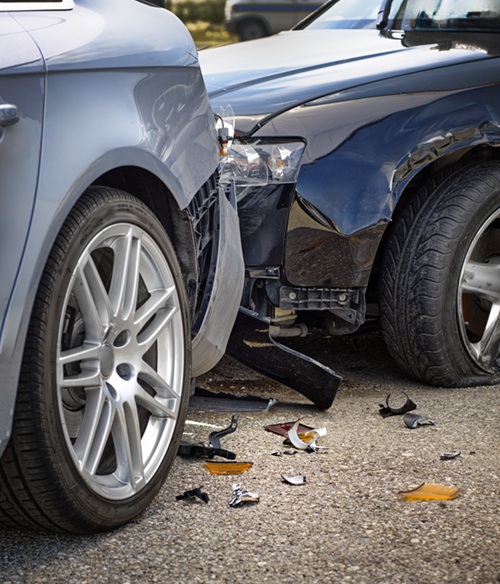
Several of Horry County’s busiest roads repeatedly emerge as areas of concern, including US-17/Kings Highway, US-17 Bypass, and US-501. These routes carry heavy traffic through some of the county’s most developed areas and connect Myrtle Beach with surrounding communities, major attractions, businesses, and residential areas.
US-17/Kings Highway runs directly through Myrtle Beach’s tourism corridor, where drivers regularly encounter hotel entrances, restaurants, shopping centers, intersections, and frequent turning traffic. US-17 Bypass carries traffic between communities along the Grand Strand, while US-501 serves as a major route between the coast, Conway, and inland South Carolina.
Although each road has different traffic patterns, they share many of the same challenges. Local commuters mix with tourists unfamiliar with the area, commercial vehicles, and seasonal traffic that can change considerably throughout the year. Multiple access points, frequent lane changes, turning vehicles, and congestion create more opportunities for conflicts between drivers, particularly along the busiest stretches of these corridors.
The Most Dangerous Intersections in Horry County
Some of the county’s busiest intersections also appear repeatedly in crash data and local reporting. Reporting from the Myrtle Beach Sun News, drawing on SCDPS rankings, has identified the interchange of US-17 Bypass and US-501 near Carolina Forest Boulevard as one of the area’s notable problem spots. Other high-traffic junctions along the Bypass corridor have raised similar concerns.
Several conditions can make these intersections particularly challenging:
- Heavy left-turn volume competing with through traffic during peak tourist season
- Frontage roads and shopping center entrances feeding directly onto highways with few gaps in traffic
- Drivers merging quickly onto or off connector ramps with limited visibility
- A high share of out-of-town drivers unfamiliar with local lane configurations
No single factor explains every collision at these intersections. Instead, high traffic volume, frequent turning and merging, and unfamiliar drivers can combine to create more opportunities for conflicts, especially during the busiest times of the year.
By The Numbers
Horry County recorded more than 54,000 traffic collisions from FFY 2020 through 2024, including hundreds of fatal crashes and more than 1,000 serious injuries.
Who Is Most Often Involved in Horry County Crashes
SCDPS victim data provides another way to understand who is most affected by serious crashes in Horry County. Over the five-year period, people ages 25 to 34 accounted for the highest number of both traffic deaths and serious injuries among the age groups reported. Adults ages 20 to 24 and 35 to 44 also represented substantial shares of serious crash victims.
The numbers show that Horry County’s traffic toll is not concentrated only among the youngest or oldest road users. Working-age adults make up a significant portion of those killed or seriously injured, adding another layer to the county’s overall crash patterns beyond where collisions occur.

What Horry County Crash Data Means for Drivers
A high number of crashes does not necessarily mean a road is unusually dangerous every time someone drives it. Heavily traveled corridors naturally have more opportunities for collisions simply because more vehicles use them each day. Crash frequency also does not always reflect severity. A busy intersection may see numerous minor collisions, while a road with fewer crashes could have a greater number of serious outcomes.
The data is better viewed as a reminder to pay closer attention in areas where traffic is dense and drivers frequently interact. Staying aware of surrounding vehicles, leaving enough following distance, limiting distractions, and allowing extra time for turns or lane changes can all help drivers navigate busy roads more safely.
Horry County’s major roads serve thousands of residents, commuters, and visitors every day. Knowing where crashes happen frequently is useful, but it does not mean those areas need to be avoided. It means drivers have one more reason to stay alert when traffic conditions become more demanding.

What These Numbers Mean If You Are Injured on One of These Roads
Horry County’s crash data provides useful context about where collisions happen frequently, but it does not determine who was responsible for an individual accident. A crash on Kings Highway, US-501, or another busy corridor still requires looking at the circumstances of that particular collision. Police reports, witness statements, photographs, available traffic footage, and other evidence can help establish what happened and whether comparative negligence becomes an issue.
The type of accident also affects which evidence matters most. In a car accident, questions may center on speed, following distance, lane changes, or right of way. A pedestrian accident may require a closer look at visibility, lighting, traffic signals, and available crossings. After a motorcycle accident, evidence about lane position, merging traffic, and whether the other driver saw the rider may become important.
The countywide numbers help show the larger traffic patterns, but every injury claim comes down to its own facts. Where the crash occurred is one part of that picture; how it happened and what the evidence can establish matter much more when determining responsibility.

What Horry County Crash Data Tells Us
Five years of crash data show that traffic collisions remain a persistent issue across Horry County, with some of the area’s busiest roads and intersections appearing repeatedly as areas of concern. Kings Highway, US-17 Bypass, and US-501 carry a tremendous amount of local and visitor traffic, making awareness especially important when congestion increases or traffic patterns become less predictable.
For drivers, knowing where crashes happen frequently can provide another reason to stay alert, limit distractions, and leave enough room to react to changing traffic. For someone who has already been injured, however, countywide statistics only provide background. Determining responsibility still depends on the circumstances and evidence surrounding the individual crash.
For someone injured on one of these roads, the location of the crash is only part of the story. A personal injury claim ultimately depends on what happened in that specific accident, the injuries involved, and the evidence available to establish responsibility. The countywide data adds useful context, but the individual facts are what matter most after a crash