Thank you so much for your advice! I highly recommend him!
Mr. Morris was extremely helpful with helping me understand the situation. What seemed very confusing to me he actually broke everything down so I could understand what everything meant. Thank you so much for your advice! I highly recommend him!
Crissy Blumer
5.0
I recommend him highly.
Jeff is a very proficient lawyer when it comes to the laws surrounding accidents, settlements and workers comp cases. He is very understanding, communicative and worked diligently on my case and settled in a very timely manner. Jeff did not allow anyone to take advantage of me and ensured that I got the proper care attention and payout I deserved. I recommend him highly.
Guiseppe Paparo
5.0
I appreciate all that Morris Law Accident Injury Lawyers did for me.
I appreciate all that Morris Law Accident Injury Lawyers did for me. Very friendly, professional, and knowledgeable staff that helped during a difficult time.
Workers' Compensation Case Involving a Motor Vehicle Accident
$2,700,000
Motorcycle Accident Construction Zone, Contractors Held Liable
$675,000
Motor Vehicle Accident in Georgetown County
$675,000
Auto Accident Settlement With A Recommended Back Surgery
$675,000
Car Accident Settlement: DUI With A Broken Leg
$725,000
Pedestrian Vs Auto With Neck Injury
$2,000,000
Pedestrian Vs Auto With Neck Injury
$458,630.32
MVA Settlement
Get Your Free Case Evaluation
Fill out the form below and we’ll contact you within 24 hours.
"*" indicates required fields
Legally Reviewed By Jeff Morris
Last Update: September 29, 2026
Table of Contents
A brain injury may not always look serious in the emergency room. Sometimes the scan comes back clean, the doctor says everything looks fine, and you go home believing you got lucky. Weeks later, the headaches will not stop. Your memory feels unreliable. Something is clearly wrong even though the paperwork says otherwise. That gap between what the paperwork says and what you are actually experiencing is where a lot of legitimate brain injury claims run into trouble.
At Morris Law, we work with brain injury victims across Aiken who are often fighting two battles at once. They are recovering from an injury that does not always show up on paper, while also convincing an insurance company that it is real. As a brain injury lawyer familiar with how these cases actually get proven, our team builds claims around the medical reality of traumatic brain injury, not just what a single scan shows. If you are dealing with a head injury after an accident, schedule a free consultation to talk through what you are experiencing.
A Clean Scan Doesn’t End Your Claim
Many traumatic brain injuries don’t appear on a standard CT scan, but that doesn’t make the symptoms any less real. Morris Law works with medical experts to build claims around the full medical evidence—not just one imaging result.
Why Injured Clients Choose The Brain Injury Lawyers at Morris Law
Brain injury claims are disputed more often than almost any other type of injury, precisely because the damage is not always visible on the imaging an insurer wants to point to. Attorney Jeff Morris has been recognized as a Top 100 Civil Plaintiff Trial Lawyer in South Carolina, with experience in cases where the injury itself was disputed before compensation ever became the issue.
Since 2016, Morris Law has built its reputation on a quality-over-quantity approach. Our Aiken personal injury attorneys bring more than 75 years of combined legal experience and have recovered more than $25 million for injured clients across South Carolina, including results ranging from six and seven-figure settlements in serious injury cases. When you hire our firm, your case is handled by an attorney who works closely with the medical experts who can explain, in terms an insurer and a jury both understand, why a normal scan does not mean nothing happened.
We believe straightforward communication is part of good representation. From your first consultation through the resolution of your case, we explain what our investigation uncovers, answer your questions honestly, and recommend the course of action we believe best protects your interests.
Our Aiken office is located at 1204 Whiskey Rd Suite D. We take brain injury cases on contingency, so you owe nothing upfront and pay no fee unless we recover compensation for you. Reach out for a free case evaluation before an insurance company decides your injury is not real.
Don’t Ignore Symptoms That Continue to Get Worse
Persistent headaches, memory problems, dizziness, and personality changes can all point to a traumatic brain injury. Early medical documentation can play an important role in protecting both your recovery and your legal claim.
Traumatic brain injury symptoms after an accident do not always appear right away. Some show up within hours. Others take days or weeks to fully develop. That delay is part of why so many brain injuries get missed or dismissed in the initial aftermath of a crash.
Persistent headaches that do not respond to typical pain relief
Memory problems or difficulty concentrating on familiar tasks
Sensitivity to light or noise that was not present before the injury
Mood changes, irritability, or emotional responses that feel out of proportion
Sleep disturbances, either sleeping far more or far less than usual
Dizziness or balance problems that persist beyond the first day or two
Any single symptom on its own might not raise alarm. A pattern of several does, especially one that develops or worsens over the days following an accident. That pattern is what a treating doctor and an experienced attorney both watch for closely. Someone who felt mostly fine at the scene, then noticed worsening headaches and memory lapses over the following week, is describing a pattern doctors see often. It is not an unusual or suspicious delay, even though it can feel that way to someone who assumed a brain injury would announce itself immediately.
5.0
"Wonderful people."
Wonderful people. I don’t even know where to begin. From the moment I called to schedule an appointment to our last meeting, Morris Law Accident Injury Lawyers has been nothing but professional and helpful as I needed help navigating legal matters.
D
Delora Pitts
Why a Normal CT Scan Doesn’t Mean No Injury
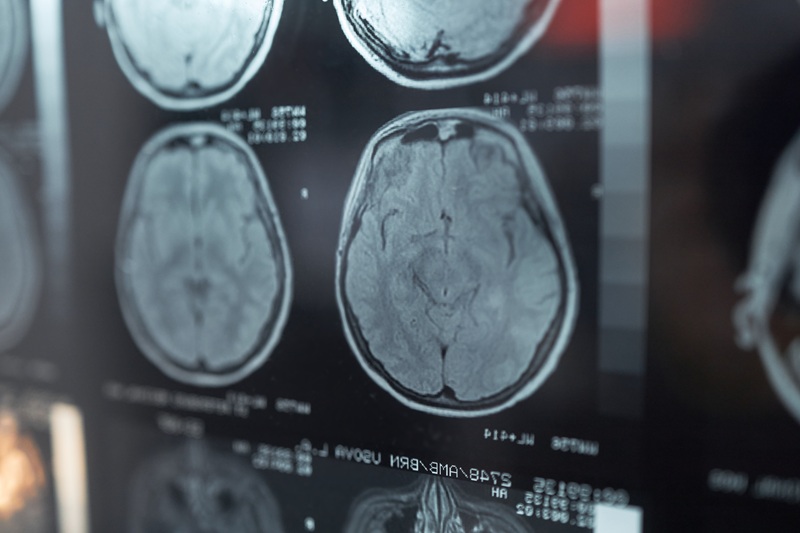
Here is the detail that causes more problems in brain injury claims than almost anything else. A normal CT scan does not mean there is no brain injury. Most concussions and mild traumatic brain injuries involve microscopic, functional damage to brain tissue, sometimes called diffuse axonal injury. Standard CT and even routine MRI scans are not designed to detect that kind of damage.
CT scans are excellent at finding what they are built to find: bleeding, skull fractures, and swelling that need immediate surgical attention. They are not built to detect the kind of cellular-level disruption that causes most concussion symptoms. Studies on mild head injuries have found that fewer than ten percent show any positive finding on CT imaging at all, even among patients with clear, documented concussion symptoms.
An insurance adjuster who points to a clean scan as proof there is no real injury is either misunderstanding the medicine or hoping the claimant does not know better. Imaging techniques and neuropsychological testing can sometimes document what a standard scan misses. A treating physician’s clinical assessment carries real legal weight even without a visible scan finding behind it. Building a claim around that clinical reality, rather than around imaging that was never designed to catch this kind of injury, is often the difference between a claim that gets taken seriously and one that gets dismissed too quickly.
How Brain Injury Severity Gets Classified
Brain injuries get classified as mild, moderate, or severe based on factors like loss of consciousness, memory gaps around the injury, and initial neurological testing. A traumatic brain injury lawyer pays close attention to this classification, since it shapes both the medical treatment path and the eventual value of a claim.
“Mild” is a clinical label, not a description of how disruptive the injury actually is to someone’s life. A mild TBI can still mean months of cognitive difficulty, an inability to return to work at full capacity, and real strain on relationships and daily functioning. Nationally, more than half of traumatic brain injuries result from motor vehicle accidents, and roughly three-quarters of all TBI cases fall into that “mild” category despite the significant disruption they often cause.
Moderate and severe brain injuries carry their own classification challenges, though for a different reason. These injuries typically do show up clearly on imaging and involve a loss of consciousness lasting longer than 30 minutes, along with more obvious cognitive and physical impairment. The claims process for these more severe injuries tends to focus less on proving the injury exists and more on documenting the full scope of lifelong care that a catastrophic injury actually requires.
Your Symptoms Matter as Much as the Scan
Brain injury cases are often built through medical evaluations, neuropsychological testing, and documentation of how your daily life has changed. We help clients gather the evidence needed to demonstrate the true impact of a traumatic brain injury.
Traumatic brain injury compensation needs to account for costs that go well beyond a hospital bill. Brain injury damages often include categories that do not come up in more straightforward injury claims.
Medical treatment, including neurology, neuropsychology, and cognitive rehabilitation therapy
Lost income, both during recovery and over a longer term if cognitive changes affect future earning capacity
Pain and suffering, accounting for the disruption to memory, mood, and daily function
Future care costs, particularly for moderate to severe injuries requiring ongoing support
For a serious brain injury, future care costs alone can dwarf every other category combined. A life care plan prepared by a qualified medical expert projects years or decades of therapy, medication, and support needs. That plan is often what actually determines whether a settlement reflects the real cost of the injury. Even for a mild TBI, lost earning capacity deserves careful attention. Cognitive symptoms that seem manageable day to day can still affect performance in ways that show up gradually over a career rather than all at once.
5.0
"The staff at The Morris Law Accident Injury Lawyers firm has been great."
The staff at The Morris Law Accident Injury Lawyers firm has been great. I had many questions leading up to my decision on which law firm to use. My experience with everyone I had contact with was positive. They have multiple offices around the state of South Carolina. Highly recommend reaching on to Jeff and his staff if you made need a great lawyer. He has a whole team of professionals waiting to help you.
M
Matthew Reynolds
How Shared Fault Can Affect a Brain Injury Claim
Not every brain injury case has a straightforward answer about who was at fault, particularly when the accident involved a car crash, a fall, or a workplace incident with more than one contributing cause. That uncertainty does not automatically prevent an injured person from recovering compensation.
South Carolina follows a modified comparative negligence rule, sometimes called the 51% bar rule. As long as you are found to be less than 51% responsible for the accident, you may still recover compensation. Any recovery is reduced by your percentage of fault. For example, if you are awarded $200,000 but found 15% responsible for the accident, your recovery would be reduced to $170,000.
Accessibility matters. Every client deserves the opportunity to speak directly with their attorney and understand what’s happening throughout the case.
Jeff Morris,Aiken Brain Injury Lawyer
Because brain injury cases already involve enough dispute over the injury itself, we do not let a fault argument go unanswered either. Police reports, witness statements, and the physical evidence from the scene all help establish what actually happened.
Filing a Traumatic Brain Injury Claim
A brain injury claim depends heavily on documentation that connects the accident to the specific symptoms that followed. We typically start by gathering emergency records, follow-up treatment notes, and any neuropsychological testing performed. From there, we build a timeline showing how symptoms developed and progressed.
South Carolina generally allows three years from the date of injury to file a lawsuit. For a brain injury specifically, waiting to see how symptoms resolve before consulting an attorney is understandable, but early documentation of cognitive and emotional changes tends to matter more in these cases than in almost any other injury type, since those changes are the evidence itself. A family member who notices personality changes, a coworker who notices declining performance, or a spouse who notices someone struggling with tasks that used to be routine can all become important sources of that documentation.
Brain Injuries Can Affect Every Part of Your Life
A traumatic brain injury may lead to ongoing medical care, cognitive therapy, lost earning capacity, and lasting changes that extend well beyond the initial accident. We work to ensure your claim reflects both today’s losses and tomorrow’s challenges.
Most brain injury settlement negotiations happen without a lawsuit, provided the insurer takes the medical evidence seriously. The claim resolves once both sides agree on an amount reflecting the documented damages, current and future.
A traumatic brain injury lawsuit becomes necessary when an insurer dismisses a mild TBI diagnosis because imaging came back clean, undervalues the long-term impact of the injury, or refuses to negotiate honestly. Filing does not guarantee a trial, but it often changes how seriously an insurer engages once expert medical testimony is genuinely on the table.
5.0
"Thank you so much for your advice! I highly recommend him!"
Mr. Morris was extremely helpful with helping me understand the situation. What seemed very confusing to me he actually broke everything down so I could understand what everything meant. Thank you so much for your advice! I highly recommend him!
C
Crissy Blumer
Protecting Your Rights After a Brain Injury in Aiken
The days and weeks after a head injury can affect both your recovery and your ability to pursue compensation. Taking a few practical steps early can help preserve the documentation your claim will eventually depend on.
Seek Follow-Up Care Even If You Feel Fine
A clean scan and a discharge from the emergency room are not the end of the story. If headaches, memory problems, or mood changes appear or persist in the days that follow, schedule a follow-up evaluation. That visit becomes part of the medical record connecting your symptoms to the accident.
Document Changes as They Happen
Keep a simple, ongoing record of symptoms, missed workdays, and anything that feels different day to day. These details are easy to forget months into a claim, and they are often what separates a fair settlement from a dismissed one.
Avoid Returning to Normal Activity Too Soon
Pushing through work, driving, or physical activity before a doctor clears you can worsen symptoms and give an insurer room to argue your recovery was complicated by something other than the original injury.
Keep a Record for Your Claim
Save medical bills, therapy records, and any correspondence with insurance companies. If a family member or coworker has noticed changes in you, ask them to write down what they observed while it is still fresh.
Getting Legal Help From Our Aiken Brain Injury Attorneys
Traumatic brain injury legal help matters most when the injury itself is being questioned, not just its value. That dispute happens more often with brain injuries than with almost any other type of harm, precisely because the damage is not always visible on the imaging an insurer wants to point to.
We built our approach around understanding the medicine well enough to counter that argument directly, with documentation that speaks to how the injury actually presents rather than what a single scan shows. That means connecting with the right medical experts early and building a record that reflects the real, lasting impact of the injury.
You or someone you love may be dealing with a brain injury from an accident in Aiken. Schedule your free consultation today and let us start building the case your medical reality actually supports, not the case a clean scan makes it look like you have.
Let Morris Law Fight for the Compensation You Deserve
You shouldn’t have to prove your brain injury alone while managing appointments, therapy, and an insurance company that questions your symptoms. Our team will investigate the accident, work with the right medical experts, and pursue the compensation your recovery requires. Your consultation is free, and you pay nothing unless we recover compensation on your behalf.