

South Carolina gives pedestrians the right of way in certain crosswalk situations, even when no painted lines mark the crossing. The rules depend on the crossing location, traffic signals, and how the pedestrian enters the roadway.
Drivers must yield when the law requires, but pedestrians must also obey signals and avoid stepping into an immediate hazard. Neither a green light nor the absence of crosswalk markings automatically settles who has priority.
These details can become important after a collision. Morris Law, LLC helps injured people address disputed right of way through pedestrian accident claims.
When Do Pedestrians Have the Right of Way?

S.C. Code § 56-5-3130 governs crosswalk yielding when traffic-control signals are absent or not operating. Drivers must slow down or stop as necessary when a pedestrian is:
- Crossing within a crosswalk on the driver’s half of the roadway.
- Approaching from the opposite half closely enough to be in danger.
For example, a driver must yield to someone already crossing within a crosswalk on the driver’s side at an unsignalized intersection. However, pedestrians cannot suddenly enter the path of a vehicle too close to avoid an immediate hazard.
Drivers also cannot overtake and pass a vehicle stopped to let someone cross at a marked crosswalk or unmarked intersection crosswalk.
Marked vs. Unmarked Crosswalks in South Carolina
Painted lines help identify a crossing, but South Carolina’s legal definition of a crosswalk also recognizes certain unmarked crossings:
- Marked crosswalks use pavement lines or other markings to designate a pedestrian crossing. They may appear at intersections or elsewhere along a roadway.
- Unmarked crosswalks exist at intersections where the boundaries of sidewalks on opposite sides extend across the roadway. Painted lines are not necessary for these crossings to qualify.
An arbitrary crossing point near an intersection does not automatically become an unmarked crosswalk. The roadway layout and sidewalk alignment matter. Where a crosswalk qualifies, drivers must follow the applicable yielding rules even without painted markings.
How Do Traffic Signals Affect Pedestrian Right of Way?
South Carolina’s traffic signal rules and pedestrian signal requirements determine when pedestrians may cross:
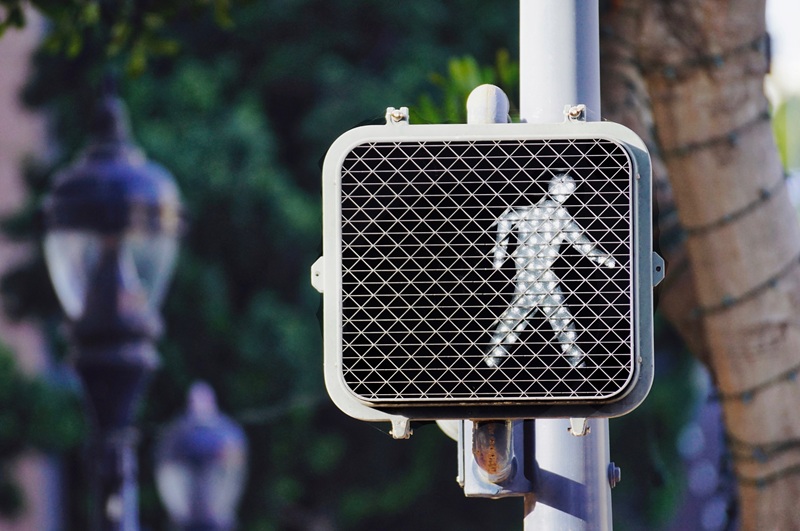
- WALK: Pedestrians may begin crossing in the indicated direction, and drivers must yield.
- DON’T WALK or WAIT: Pedestrians may not begin crossing. Those already crossing lawfully may continue to the sidewalk or a safety island.
- Circular green light: Without a separate pedestrian signal, pedestrians generally may cross within a marked or unmarked crosswalk. Signs may prohibit particular crossings.
- Green arrow: An arrow alone does not authorize pedestrians to enter the roadway.
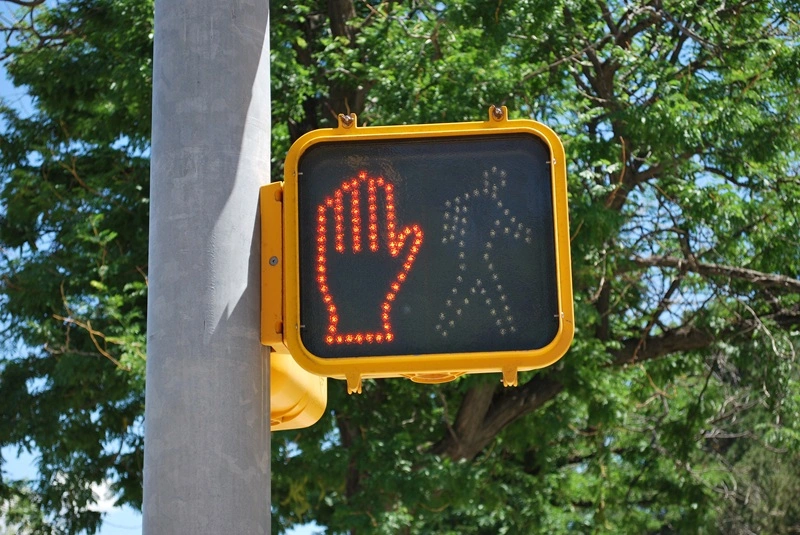
Where pedestrian signals are installed, follow their indications rather than relying on the light facing vehicle traffic.
Must Turning Drivers Yield to Pedestrians?
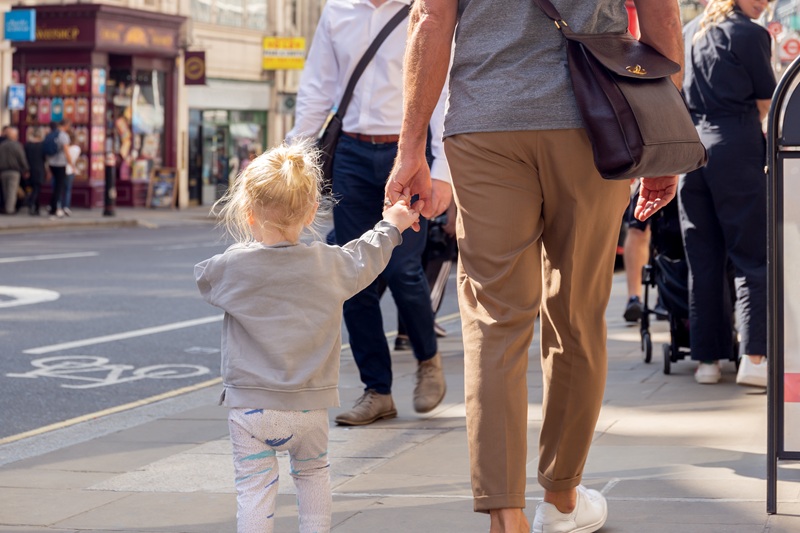
A signal permitting a turn does not eliminate a driver’s obligation to yield to pedestrians lawfully crossing. For example, someone turning right on green must yield to a pedestrian crossing with a WALK signal. Drivers making permitted left turns also must yield to pedestrians lawfully within the intersection or adjacent crosswalk.
South Carolina generally allows right turns on red after a complete stop, unless a sign prohibits the turn. Before proceeding, drivers must yield to pedestrians lawfully within the adjacent crosswalk.
Checking approaching traffic alone is not enough. A turning driver must also watch for people crossing the roadway. After a collision, signal timing, camera footage, and the pedestrian’s location can help establish whether the driver should yield.
What Responsibilities Do Pedestrians Have?
Pedestrians must obey applicable traffic signals and avoid entering the roadway when an approaching vehicle presents an immediate hazard. Under S.C. Code § 56-5-3130(b), someone cannot suddenly leave a curb and step into a vehicle’s path when it is too close.
Other responsibilities include:
- Using the right half of a crosswalk whenever practicable, as required by § 56-5-3140.
- Yielding outside crosswalks to vehicles on the roadway.
- Using a marked crosswalk between adjacent signalized intersections when their traffic signals are operating.
Section 56-5-3150 does not prohibit crossing outside a crosswalk everywhere. However, the crossing location determines which restrictions apply, and local ordinances may impose additional requirements.
For example, crossing midblock between adjacent intersections with operating signals is prohibited unless the pedestrian uses a marked crosswalk.
Do Drivers Still Have Duties Outside Crosswalks?
Yes. A pedestrian’s obligation to yield does not remove a driver’s duty to exercise care. Under S.C. Code § 56-5-3230, drivers must use due care to avoid pedestrians and sound the horn when necessary.
Drivers must also take appropriate precautions when they observe children or someone who appears confused, incapacitated, or intoxicated.
A driver cannot disregard someone already in the roadway simply because that person crosses outside a crosswalk. Speed, visibility, available stopping distance, and time to react can help determine whether the driver takes reasonable precautions.
How Is Fault Determined After a Pedestrian Collision?
Fault depends on how each person’s actions contribute to the collision. A driver may speed, overlook a crosswalk, or fail to yield while turning. A pedestrian may cross against a signal or suddenly enter a vehicle’s path.

Evidence helps establish what happens and which crossing rules apply:
- Signal timing: Whether the pedestrian has permission to cross and the driver has permission to proceed.
- Camera footage: Vehicle movements and the pedestrian’s location before impact.
- Crash reports and witness statements: Observations about the collision and each person’s actions.
- Speed and braking evidence: Whether the driver has time and distance to avoid impact.
- Roadway conditions: Lighting, visibility, obstructions, and crosswalk layout.
For example, footage showing a pedestrian crossing with a WALK signal may support a claim against a turning driver. An unmarked crosswalk’s location can also matter if the initial investigation overlooks it. Medical records separately document the injuries, treatment needs, and resulting limitations.
Can Shared Fault Reduce Compensation?
South Carolina follows a modified comparative negligence system. Under Nelson v. Concrete Supply Co., an injured person’s negligence proportionally reduces their recoverable damages. Someone whose share of fault exceeds 50% generally cannot recover. Cases involving multiple responsible parties may require additional analysis.
For example, a pedestrian with $100,000 in recoverable damages who bears 20% of the fault may recover $80,000.
Crossing outside a crosswalk does not automatically prevent compensation. If a speeding driver strikes someone crossing midblock, both parties’ conduct requires evaluation. The pedestrian’s duty to yield and the driver’s duty to exercise care can both affect the outcome.
Understanding Your Options After a Collision
The crossing location, traffic signals, and available evidence can make a substantial difference when responsibility is disputed. Preserve photographs, witness information, and medical records when possible, since camera footage and other evidence may become unavailable.
If an insurer disputes your right of way or assigns you fault, Morris Law, LLC can help assess the evidence. Contact our team to discuss your injuries and options before accepting a settlement.