

South Carolina requires motorcycle operators and passengers younger than 21 to wear approved helmets. Riders age 21 and older are exempt from the state’s general helmet requirement.
After a crash, helmet use and responsibility for the collision are separate questions. Riding without a helmet does not automatically mean you caused the accident or cannot pursue compensation.
Morris Law, LLC helps injured riders address questions about fault and insurance through motorcycle accident claims. Understanding the helmet rules can help you recognize which issues may affect your claim.
What Are South Carolina’s Motorcycle Helmet Requirements?
Under S.C. Code § 56-5-3660, operators and passengers younger than 21 must wear approved protective helmets. The requirements include:
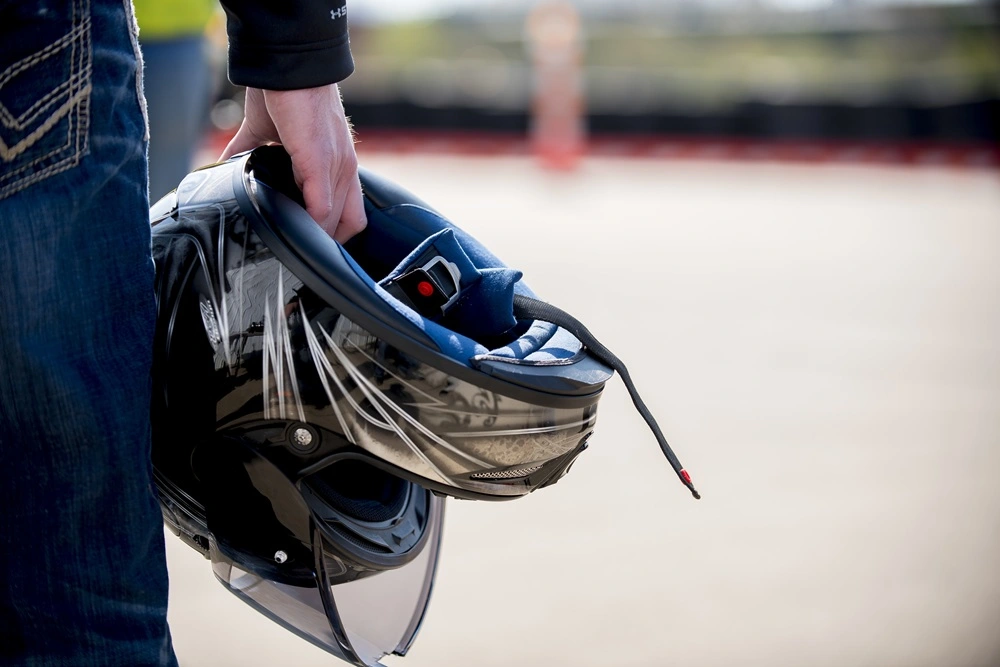
- State approval: Helmets must meet South Carolina Department of Public Safety approval requirements.
- A securing strap: Each helmet must have a neck or chin strap.
- Reflective material: Both sides of the helmet must have reflective material.
The age requirement applies individually to the operator and passenger. A passenger younger than 21 must wear a helmet even when riding with an operator who is exempt.
Do Riders Age 21 and Older Need Helmets?
South Carolina’s general motorcycle helmet law does not require helmets for operators or passengers age 21 and older. A 25-year-old rider may legally ride without one, while a 19-year-old must wear an approved helmet.
However, legal permission does not remove the safety benefits. Wearing a helmet helps reduce the risk of serious head injuries if a crash occurs.
What Other Motorcycle Safety Requirements Apply?
South Carolina’s motorcycle safety rules also address passenger equipment and eye protection:
- Passenger helmets: Passengers younger than 21 must wear approved helmets, regardless of the operator’s age. Each person’s age determines their helmet requirement.
- Passenger footrests: S.C. Code § 56-5-3650 requires passenger footrests unless the passenger rides in a sidecar or enclosed cab.
- Operator eye protection: S.C. Code § 56-5-3670 requires operators younger than 21 to wear approved goggles or a face shield. This requirement does not apply to passengers.
- Windshield exception: Under § 56-5-3680, a windshield meeting state specifications provides an exception to the eye protection requirement.
Wearing a helmet alone does not necessarily satisfy the separate eye protection requirement.

What Are the Penalties for Violating the Helmet Law?
Violating South Carolina’s helmet or related protective equipment requirements is a misdemeanor under S.C. Code § 56-5-3700. Upon conviction, the penalty is a fine of up to $100 or imprisonment for up to 30 days.
A helmet citation does not automatically establish that a rider caused a collision. Any effect on an injury claim requires a separate analysis of the law and evidence.
Can Riding Without a Helmet Affect an Injury Claim?
Riding without a helmet does not automatically prevent you from recovering compensation in South Carolina. Your age and legal obligation to wear one affect the analysis. Responsibility for causing the collision remains a separate question.
Riders Age 21 and Older

In Mayes v. Paxton, the South Carolina Supreme Court considers a claim involving an adult motorcyclist who rides without a helmet. The court holds that helmet nonuse does not constitute contributory negligence because the rider has no statutory duty to wear one.
The court also rejects the argument that this choice means accepting the risk of another driver’s negligence. Under the decision’s reasoning, lawful helmet nonuse alone does not establish negligence.
Riders Younger Than 21
For riders younger than 21, failing to wear an approved helmet violates state law. However, that violation does not automatically establish responsibility for the crash or eliminate an injury claim.
For example, a driver may run a red light and strike a 19-year-old motorcyclist who is not wearing a helmet. The driver’s conduct may establish how the collision occurs. Whether the helmet violation affects compensation requires separate legal analysis and evidence connecting helmet nonuse to the claimed injuries.
How Does Shared Fault Affect Compensation?
South Carolina follows a modified comparative negligence system. Someone whose fault exceeds 50% generally cannot recover.
For example, suppose a motorcyclist has $100,000 in recoverable damages and bears 20% of the fault. Their recovery decreases to $80,000. Cases involving multiple responsible parties can require additional analysis.
Helmet nonuse should not automatically count toward a rider’s percentage of fault. The age-based rules and legal principles discussed above determine whether a helmet argument has a valid basis.
What Evidence Establishes Responsibility for a Collision?
Determining fault requires evidence of how the collision happened. Speeding, unsafe turns, following too closely, and failure to yield may contribute to a crash.
Relevant evidence includes:
- Crash reports and witness accounts: Observations about vehicle movements, driver statements, and traffic violations.
- Camera footage: Recordings showing signals, turning movements, and the moments before impact.
- Physical evidence: Vehicle damage, debris, and roadway marks that help reconstruct the collision.
- Road conditions: Visibility, traffic controls, and hazards that may affect either driver’s actions.
For example, footage may show a driver turning left across a motorcyclist’s path without yielding. Whether the rider wears a helmet does not establish whether that driver yields. Evidence about crash responsibility and any legally relevant injury-causation questions must receive separate consideration.

Why Helmet Safety Still Matters
South Carolina allows riders age 21 and older to choose whether to wear a helmet. That legal choice does not change the protection a helmet provides.
The National Highway Traffic Safety Administration identifies helmets as an effective way to reduce head injuries and deaths. However, helmets cannot prevent every injury, including fractures, spinal injuries, and internal damage.

How Medical Evidence Addresses Helmet Questions
Medical records document the injuries a rider actually sustains, the treatment required, and any lasting limitations. When legally relevant, qualified experts may evaluate whether helmet use could affect a particular injury’s severity.
A fractured leg raises different questions from a traumatic brain injury. General statements about helmet effectiveness cannot replace evidence connecting helmet nonuse to the specific injury. Treatment records, rehabilitation assessments, and employment documentation also help establish the resulting financial and personal losses.
Understanding Your Rights After a Crash
Helmet requirements, collision fault, and injury compensation involve separate legal questions. Riding without a helmet does not automatically resolve any claim against another driver.
If an insurer questions your helmet use or disputes responsibility, Morris Law, LLC can help you understand your options. Contact our team to discuss the collision, your injuries, and any settlement offer before signing a release.