Thank you so much for your advice! I highly recommend him!
Mr. Morris was extremely helpful with helping me understand the situation. What seemed very confusing to me he actually broke everything down so I could understand what everything meant. Thank you so much for your advice! I highly recommend him!
Crissy Blumer
5.0
I recommend him highly.
Jeff is a very proficient lawyer when it comes to the laws surrounding accidents, settlements and workers comp cases. He is very understanding, communicative and worked diligently on my case and settled in a very timely manner. Jeff did not allow anyone to take advantage of me and ensured that I got the proper care attention and payout I deserved. I recommend him highly.
Guiseppe Paparo
5.0
I appreciate all that Morris Law Accident Injury Lawyers did for me.
I appreciate all that Morris Law Accident Injury Lawyers did for me. Very friendly, professional, and knowledgeable staff that helped during a difficult time.
Workers' Compensation Case Involving a Motor Vehicle Accident
$2,700,000
Motorcycle Accident Construction Zone, Contractors Held Liable
$675,000
Motor Vehicle Accident in Georgetown County
$675,000
Auto Accident Settlement With A Recommended Back Surgery
$675,000
Car Accident Settlement: DUI With A Broken Leg
$725,000
Pedestrian Vs Auto With Neck Injury
$2,000,000
Pedestrian Vs Auto With Neck Injury
$458,630.32
MVA Settlement
Get Your Free Case Evaluation
Fill out the form below and we’ll contact you within 24 hours.
"*" indicates required fields
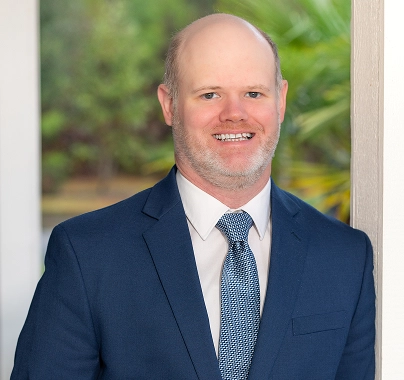
Legally Reviewed By Jeff Morris
Last Update: July 29, 2026
Table of Contents
A traumatic brain injury can affect far more than the first few days after an accident. What begins with an emergency room visit often leads to months of neurological care, rehabilitation, time away from work, and uncertainty about what recovery will ultimately look like. While some brain injuries are immediately obvious, others develop over time as symptoms like memory problems, headaches, difficulty concentrating, or personality changes become more apparent.
At Morris Law, our Murrells Inlet brain injury lawyers represent people whose lives have been changed by someone else’s negligence. Brain injuries can happen in many different ways, but the challenges that follow are often remarkably similar. Regardless of how the injury occurred, we investigate the circumstances, work with the medical professionals treating your condition, and pursue compensation that reflects the long-term impact a brain injury can have on your health, your career, and your family.
Concerned About a Brain Injury?
Brain injuries can affect your health, your career, and your future. Let us review what happened and explain your legal options.
Brain injury cases carry higher stakes than most personal injury claims, and insurance companies treat them that way. A six-figure or seven-figure claim gets more scrutiny. It also gets more delay tactics and more pressure to settle early, before anyone fully understands the long-term outlook. We build these cases slowly and deliberately. Rushing a catastrophic injury claim almost always costs our clients money later.
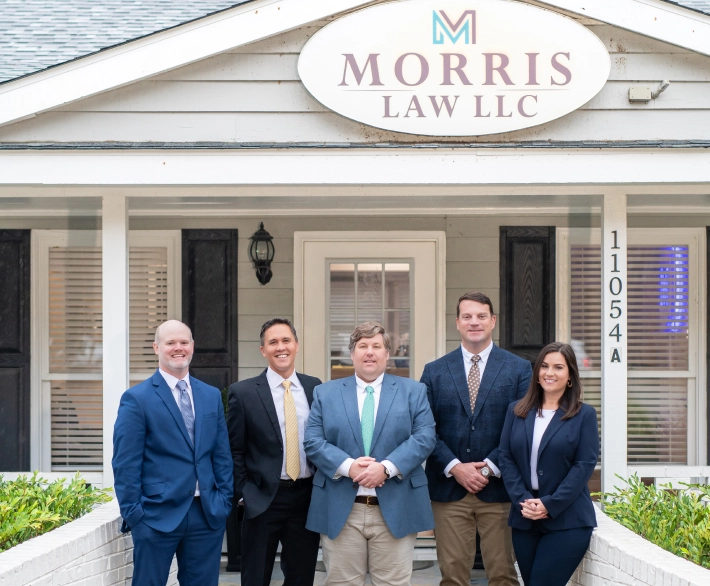
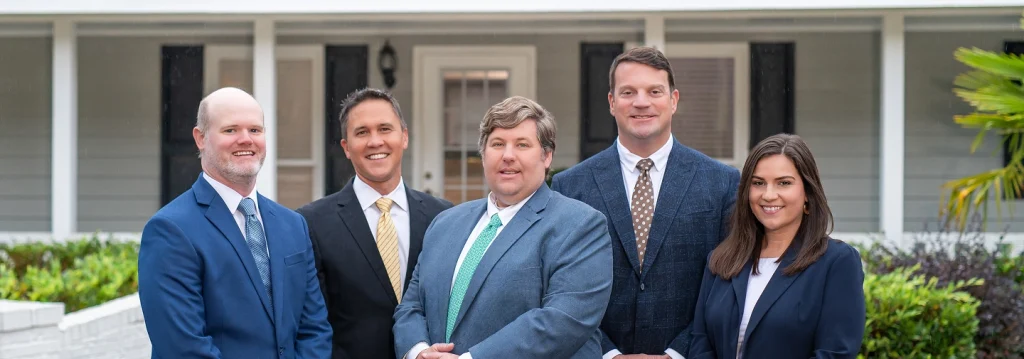
Since 2016, Morris Law has represented injured clients across South Carolina with a quality-over-quantity approach rather than a high-volume settlement model. Our attorneys bring more than 75 years of combined legal experience. We have recovered more than $25 million for clients throughout the state. A Murrells Inlet brain injury attorney at our firm stays on your file from the first consultation through resolution. Your case does not get handed off to whoever has availability that week.
We tell clients what we actually think, not what sounds reassuring in the moment. If an offer reflects the true cost of a brain injury, we say so. If it falls well short, as early offers on these claims usually do, we explain exactly why. We also lay out what pursuing more would look like.
Our office sits at 11054 SC-707 in Murrells Inlet, close to St. James High School. Brain injury claims often involve neurologists, rehabilitation specialists, and neuropsychological experts whose opinions help explain the full extent of an injury. Reach out and let us walk through what happened before you sign anything from an insurance company.
5.0
"Thank you so much for your advice! I highly recommend him!"
Mr. Morris was extremely helpful with helping me understand the situation. What seemed very confusing to me he actually broke everything down so I could understand what everything meant. Thank you so much for your advice! I highly recommend him!
C
Crissy Blumer
How Brain Injuries Happen Along the Grand Strand
A brain injury usually results from a direct blow to the head or a violent jolt. It can also come from oxygen deprivation, as happens in a near-drowning. Murrells Inlet’s mix of highway traffic, tourism-driven businesses, and coastal recreation creates several distinct paths to a serious head injury.
Car and motorcycle accidents on Highway 17 and SC-707, especially involving tourists unfamiliar with local traffic patterns
Falls at restaurants, retail stores, and hotels along the Marshwalk and surrounding business district
Boating accidents and injuries during chartered deep-sea fishing trips, a significant part of the local economy
Near-drowning incidents that starve the brain of oxygen even without a direct impact
Falls on construction sites, one of the more common causes of catastrophic injury in an area that keeps adding new housing and commercial buildings
Murrells Inlet’s population has grown by nearly 15 percent since the 2020 census. It continues expanding at close to 2 percent a year. That growth means more vehicles on the same roads and more construction crews working at height. It also means more first-time visitors navigating unfamiliar streets during peak tourist season. Each of those factors raises the odds of a serious head injury.
Premises liability cases deserve their own mention here. A wet floor near an outdoor patio, a poorly lit stairwell at a rental property, or an uneven boardwalk plank along the Marshwalk can each cause a fall serious enough to result in a head injury. These cases often come down to whether a property owner knew, or should have known, about the hazard and failed to fix it. Regardless of the cause, we treat these injury cases with the care and attention they deserve.
Recognizing the Signs of a Traumatic Brain Injury
One detail most people do not know until they are living it: a normal CT scan does not rule out a real brain injury. CT imaging is built to catch bleeding and structural damage. It is not built to catch the kind of diffuse injury that shows up as memory problems, mood changes, or trouble concentrating weeks later. Insurance adjusters routinely point to a clean scan as proof an injury was not serious. A neuropsychological evaluation would often tell a very different story.
Symptoms of a traumatic brain injury vary depending on which part of the brain was affected. They commonly include difficulty regulating emotions or impulses, memory loss, and trouble speaking or understanding language. Loss of a primary sense like vision or hearing is also common, along with problems with balance or coordination. In the most severe cases, an injury can affect a person’s ability to breathe without assistance. We work with treating physicians early to document symptoms as they actually present. We do not let an early diagnosis define the entire claim.
Don’t Let an Insurance Company Minimize Your Injury
A normal scan doesn’t always tell the full story. We work with medical experts to document the lasting effects of traumatic brain injuries.
Doctors classify a traumatic brain injury as mild, moderate, or severe based on factors like how long someone lost consciousness and how they scored on tests like the Glasgow Coma Scale in the emergency room. That classification gets recorded in the chart within the first hour or two after the injury, often before anyone knows how the person will actually recover.
A “mild” traumatic brain injury, which is the clinical term for what most people call a concussion, can still produce lasting memory problems, headaches, and difficulty concentrating months later. Insurance adjusters seize on that word “mild” and use it to argue a claim should be worth far less than it actually is. We do not let a first-day label decide the value of a claim that may still be evolving weeks or months into treatment.
What a Brain Injury Actually Costs
There is no average settlement figure for a brain injury claim, because no two injuries affect a person’s life the same way. What tends to hold true is that these claims involve more categories of loss than a typical injury case. Each one needs its own documentation.
Medical Care, Now and for Decades to Come
A brain injury rarely ends with the hospital stay. Ongoing costs can include rehabilitation, neuropsychological therapy, and medication management. Home health assistance and equipment often follow for anyone left with lasting physical limitations. Research published through Northwestern University has put the lifetime medical cost of a brain injury as high as $3 million in severe cases. Even a moderate injury regularly runs into six figures once long-term care is factored in.
Lost Income and the Question of Working Again
Many people with a serious brain injury cannot return to the job they held before the accident. Some cannot return to work at all. We calculate more than the paychecks already missed. We also account for what the injury has done to someone’s ability to earn a living for the rest of their career.
The Toll on Relationships and Daily Life
A brain injury can change someone’s personality, patience, and ability to connect with the people closest to them. Family members often become caregivers overnight. Friendships built around shared activities can fade when those activities are no longer possible. South Carolina law allows compensation for this kind of loss, not just the financial impact. We make sure it gets documented rather than treated as an afterthought.
Why Insurers Fight Harder on Brain Injury Claims
A brain injury claim is expensive to pay out, so insurance companies invest more effort in disputing one. Adjusters frequently argue that a “mild” traumatic brain injury should heal quickly or that ongoing symptoms are unrelated to the accident. They may also claim memory and mood symptoms stem from something unrelated to the accident, like stress or a prior condition. Catastrophic claims carry more money at stake. Insurers are more willing to let a case go to trial rather than pay what it is actually worth.
We counter this by building the medical record early and thoroughly, not waiting until a dispute arises. Every symptom gets tied back to the injury through the treating physicians actually managing your care. Every offer gets measured against the true, long-term cost of the injury, not the insurer’s initial number.
5.0
"The Morris Law Accident Injury Lawyers firm staff was efficient"
The Morris Law Accident Injury Lawyers firm staff was efficient, professional and honest from start to completion of my case. The staff answered all my concerns and always made me feel like a valued client. I would recommend Morris Law Accident Injury Lawyers to others..
J
Jennifer Simmons
Recovering From a Brain Injury Requires Ongoing Documentation
The first few weeks after a brain injury are often when new symptoms begin to appear. Medical providers are still evaluating the extent of the injury, treatment plans continue to evolve, and it may not yet be clear how the injury will affect your daily life. The steps you take during this period can influence both your recovery and the evidence available to support your claim.
A Doctor’s Visit Is Only the Beginning
Emergency physicians focus on identifying life-threatening injuries, not necessarily the long-term cognitive effects of a traumatic brain injury. If headaches, dizziness, memory problems, personality changes, or difficulty concentrating continue after the initial visit, follow up with a neurologist or another specialist. Continued evaluation helps ensure your treatment matches your symptoms and creates a medical record documenting how the injury progresses over time.
Changes in Daily Life Matter
Brain injuries often affect more than physical health. Problems with memory, concentration, sleep, mood, speech, or decision-making can become apparent weeks after the accident. Keeping a journal of these changes, along with missed workdays and activities you can no longer do, can provide valuable context for both your medical providers and your legal claim.
Consistent Treatment Tells the Full Story
Recovery from a brain injury is rarely a straight line. Attend follow-up appointments, complete recommended therapy, and tell your doctors about any new or worsening symptoms. Ongoing treatment not only supports your recovery but also documents how the injury continues to affect you over time.
Early Insurance Conversations Can Shape a Claim
Insurance companies sometimes request recorded statements or discuss settlement before the long-term effects of a brain injury are understood. Speaking with an attorney before providing detailed statements or accepting an early offer can help ensure important medical evidence and future damages are fully considered before decisions are made.
Plan for the Long-Term Impact
A brain injury claim should account for more than today’s medical bills. We’ll pursue compensation that reflects your future care and financial losses.
What South Carolina Law Requires of Your Traumatic Brain Injury Claim
South Carolina generally gives you three years from the date of the injury to file a personal injury lawsuit, under the state’s statute of limitations. Catastrophic injury cases often take longer to fully evaluate than a routine claim. The long-term prognosis can take months or longer to become clear. That makes involving an attorney early more important, not less.
South Carolina also follows a modified comparative negligence rule, sometimes called the 51% bar rule. You can still recover compensation as long as you are found less than 51% at fault for the accident that caused your injury. Your recovery is simply reduced by your share of the blame.
If Your Brain Injury Happened at Work
If your brain injury happened on the job, whether from a fall on a construction site or an incident at a retail or hospitality business, you may have a workers’ compensation claim in addition to any personal injury claim against a negligent third party. These claims can run alongside each other, and untangling which applies to which part of your losses is not something most injured workers should try to sort out alone.
Workers’ compensation insurers use many of the same tactics as liability insurers when a brain injury is involved. They may argue an employee could return to modified duty sooner than a treating physician recommends, or dispute whether ongoing symptoms are actually work-related. We push back on both.
Talk With Our Murrells Inlet Brain Injury Attorney at Morris Law
A brain injury changes more than your health. It can reshape a family’s finances, routines, and relationships for years after the accident itself is over. At Morris Law, we build these claims with that reality in mind. We do not treat them like a standard injury case with a bigger number attached.
We work on a contingency basis, so there is no upfront cost to finding out what your claim is worth. There is no payment owed unless we recover compensation for you. A conversation with our team costs nothing, and it often reveals coverage, evidence, or long-term costs that had not been considered yet.
If you or someone you love suffered a brain injury in Murrells Inlet or anywhere along the Grand Strand, contact Morris Law today for a free consultation. Brain injuries often evolve over time, and understanding your legal options early can help preserve the evidence and medical documentation needed to build a strong claim.
Speak With a Murrells Inlet Brain Injury Lawyer
If someone else’s negligence caused your brain injury, we’re ready to investigate your case, answer your questions, and fight for the compensation you deserve.